

Europa casino Plinko game
Introduction
Plinko looks simple at first glance. A ball drops from the top of a vertical board, hits a field of pegs, changes direction again and again, and eventually lands in a slot with a multiplier. That visual simplicity is exactly why the format stands out. On the Europa casino Plinko page, the appeal is immediate: there is no reel set to decode, no payline structure to memorise, and no Europa Casino bonus review for players comparing real money casinos map to study before placing a stake. You choose your settings, release the ball, and watch randomness unfold in real time.
But that clean presentation can be misleading if a player assumes the experience is shallow. In practice, Plinko is one of those casino games where a very basic interface hides a surprisingly wide range of outcomes. The same board can feel calm, grindy, frustrating or explosive depending on the risk level, row count and stake size. I find that this is the real reason Plinko keeps attracting attention in the UK market: it gives players a direct, visual form of chance, while still allowing enough control over session style to make each setup feel different.
Plinko’s risk profile is often misread because the middle rows cluster most outcomes, so a session can feel stable right up until a ball drifts to the outer multipliers and swings the balance sheet sharply. The house edge tends to be baked into the payout table rather than into a separate fee, which means players should check the stated return-to-player percentage for each risk level before settling on a strategy. Many operators cap the maximum win on this game type, so a high multiplier on the board does not always translate into an uncapped cashout. A sensible approach is to treat Plinko as a short-burst game: set a loss limit for the session and step away once the ball count or stake level starts to feel repetitive.
What Plinko is and why it draws so much attention
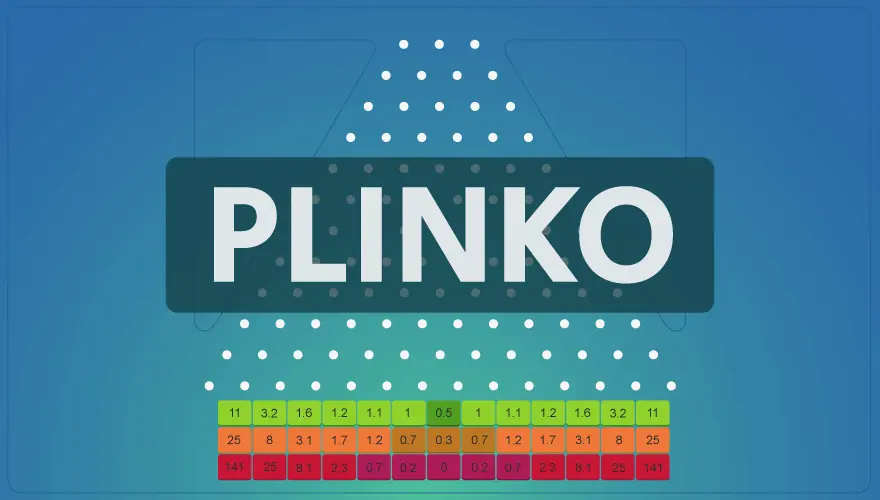
At its core, Plinko is a probability-based drop game. The player selects a stake, usually chooses a risk level, often adjusts the number of rows, and then drops one ball at a time. As the ball collides with pegs, it moves left or right until it reaches the bottom. Each landing slot corresponds to a fixed multiplier. Lower multipliers tend to sit near the centre, while the highest ones are usually placed at the far edges, where reaching them is statistically less common.
The reason this format became so noticeable is not only the simplicity of the rules. It is the way the result is visualised. In a slot, the random number is hidden behind spinning reels and symbol combinations. In Plinko, the path itself becomes the event. Players watch the ball bounce through a chain of tiny directional changes, and that creates a very specific kind of tension. The outcome is still random, but it feels physically traceable. You can see the route, even though you cannot control it.
That distinction has practical value. Many players who feel detached from standard reel games respond better to Plinko because the feedback is instant and concrete. Every drop is self-contained. There is no need to wait for a feature trigger, no dead spin sequence, no long explanation of symbol behaviour. The board tells the story on its own.
Another reason the format has become so visible is that it scales well across different playing styles:
Low-risk settings can create a steadier, flatter session with frequent small returns.
High-risk settings can turn the same board into a hunt for rare, outsized multipliers.
Auto-play options can make the experience feel almost statistical, as if the player is testing a model rather than spinning a classic casino product.
That flexibility is one of Plinko’s strongest hooks. It does not mean the player gains control over the result. It means the player can shape the character of the session before randomness takes over.
How the board actually works in practice
To understand Europa casino Plinko properly, it helps to separate the visual layer from the mathematical one. Visually, the ball appears to bounce organically from peg to peg. Mathematically, the game is built around a distribution of outcomes, with the centre of the board usually representing the most common landing area and the edges representing less frequent but more lucrative results.
Each collision sends the ball one step left or right. Over many drops, this creates a bell-shaped distribution: central slots are hit more often, while extreme edge slots are much harder to reach. That is why the largest multipliers are typically placed on the outside. The game is effectively converting path variation into a payout map.
Here is a simplified view of the main adjustable elements and what they usually mean for the player:
| Setting | What it changes | What it means in a real session |
|---|---|---|
| Stake size | The value of each drop | Directly affects bankroll pressure and the emotional weight of every result |
| Risk level | The multiplier spread across the board | Higher risk usually means more low-end landings and rarer large hits |
| Rows | The number of bounce decisions before the ball lands | More rows often increase route complexity and can widen the sense of variance |
| Auto-play | The speed and continuity of repeated drops | Can make patterns feel more noticeable, but can also accelerate losses if used carelessly |
One of the easiest mistakes is to treat these controls as cosmetic. They are not. A change in row count or risk level can make the same game feel entirely different. On a lower setting, the board may return small amounts frequently enough to keep the session moving without major swings. Shift to a higher-risk profile, and the board can start producing long stretches of disappointing landings before a meaningful multiplier appears, if it appears at all.
This is where Plinko becomes more than a novelty. The player is not solving a system, but they are selecting the shape of their exposure to randomness. That is a very different experience from simply pressing spin on a slot and accepting a fixed volatility profile.
Why the pace feels so different from many other casino formats
Plinko has a distinctive tempo because every round is short, visible and final. There is no slow build into a feature round. There are no line evaluations scrolling across the screen. The drop begins, the path develops, and the result is known in seconds. That pace can make the game feel lighter than a slot, but it can also make it more intense than players expect.
In practical terms, the speed of Plinko creates two opposite effects at once. On one hand, it is easy to understand and easy to follow. On the other, the short cycle between stake and result can encourage rapid repetition. A player can go through a session much faster than intended, especially with auto-drop enabled.
I often describe Plinko as a “clean-looking fast game with hidden acceleration.” The screen does not feel busy, so the player may not casino registration at Europa Casino how quickly decisions are stacking up. That is one of the format’s most important characteristics. The interface is calm; the bankroll movement may not be.
There is also a psychological detail worth noting. In slots, a losing spin often feels dead on arrival. In Plinko, even a poor result comes after a visible journey. That small difference changes how players experience near misses and disappointment. Watching a ball drift toward a high multiplier before bouncing back inward creates a stronger sense of “almost” than many reel games. It is not a strategic signal, but it is emotionally powerful.
That visual near-miss effect is one reason sessions can become sticky. The player does not just remember the result. They remember the route the ball almost took.
Risk levels, probability and what players should not misunderstand
Plinko is easy to explain, but it is also easy to misread. The most common misunderstanding is the idea that the player can identify a board pattern and exploit it. In reality, the game is still governed by random outcomes and predefined probabilities. The visible path may look physical, but it should not be mistaken for a skill layer.
What the player can control is exposure. That is mainly done through risk level, number of rows and stake size. These settings influence the distribution of returns, not the fairness of the next drop. If the game offers low, medium and high risk, the difference is usually not whether the board becomes “better” or “worse,” but how sharply the payout structure is skewed.
A practical way to think about it:
Low risk tends to compress outcomes. You usually see more modest returns and fewer dramatic swings.
Medium risk often creates a more mixed profile, balancing frequent low-end landings with occasional stronger multipliers.
High risk stretches the board. Small results can dominate, while meaningful top-end hits become much rarer but potentially much larger.
The headline multiplier on a high-risk game is effectively a price tag for volatility, and players who chase it frequently overlook how that volatility behaves in real sessions. In most cases, a high-risk slot pays smaller returns more often than the teaser suggests, so the practical consequence is a bankroll that erodes through a long run of modest or empty spins before any significant win materialises. Industry-standard RTP figures typically sit in the mid-90s percentage range for such titles, but that figure describes the long-term average across millions of spins, not a single sitting. A short session can easily fall well short of that theoretical return, and the probability of that happening rises sharply the higher the volatility goes. Players should treat the stated multiplier as an occasional event rather than an expected outcome, and budget their session accordingly, because the cost of chasing it is not just the stake but the entire sequence of losses that typically precedes it.
Another key point is RTP. If Europa casino Plinko displays a return-to-player figure, that number reflects long-term theoretical performance, not what an individual session will look like. Plinko can feel brutally uneven over the short run, especially at aggressive settings. A handful of drops tells you almost nothing about the board’s broader return profile.
One of the most useful observations I can offer is this: Plinko often creates the illusion of transparency while remaining just as capable of sharp variance as many high-volatility slots. You see more of the journey, but that does not make the destination more predictable.
Who Plinko suits and who may find it frustrating
Not every player responds well to this format, and that is worth saying clearly. Europa casino Plinko is likely to suit players who enjoy short, self-contained rounds and who appreciate a direct relationship between stake, drop and result. It also fits those who like adjusting session style manually rather than relying on a fixed reel model.
It may be a good fit for players who:
want a break from symbol-heavy slots and feature-chasing structures;
prefer visual randomness over layered bonus systems;
like experimenting with low, medium and high-risk profiles; For a closer look at the games library, sign up bonus checklist sorts the titles by theme and pace.
are comfortable with repeated short rounds and quick bankroll feedback.
On the other hand, Plinko may disappoint players who want narrative progression in a session. There are no expanding mechanics, no evolving bonus mode, no unlock path and usually no sense of “building toward” something. Each drop stands mostly on its own.
It may also frustrate players who confuse activity with control. The ball is moving, the path is visible, and the board feels lively, but the player is not influencing the route once the drop begins. If someone wants a game where decisions meaningfully alter the result after the round starts, Plinko is not that format.
There is a third group to mention: players who enjoy slow-burn sessions. For them, Plinko can feel too abrupt. The rounds are quick, and the emotional rhythm can become repetitive if the player does not genuinely enjoy the drop-and-land cycle.
What to expect from real session dynamics
Session behaviour in Plinko depends heavily on setup. That sounds obvious, but in this format it is more important than in many other casino games. Small configuration changes can alter the session from manageable to punishing.
The table below summarises how different approaches tend to feel in practice:
| Session style | Typical setup | Likely player experience |
|---|---|---|
| Conservative | Lower stake, lower risk, controlled manual drops | More stable rhythm, less dramatic movement, fewer standout moments |
| Balanced | Moderate stake, medium risk, mixed manual and auto-play | Reasonable pace with occasional stronger hits and manageable variance |
| Aggressive | Higher stake, high risk, frequent or automatic drops | Sharper swings, longer dry spells, more emotional pressure and faster bankroll turnover |
One memorable trait of Plinko is that losses can arrive quietly. A slot often signals trouble through a visible run of dead spins. Plinko can do something subtler: it keeps producing action, but a string of low multipliers may still leave the player steadily behind. Because there is always movement on screen, the session can feel active even when value is not really returning.
That is why bankroll discipline matters more than some players expect. The game does not need loud animations to become expensive. Its speed does that work on its own.
How Plinko compares with slots and other casino games
The easiest comparison is with classic slots, because that is where most players come from. The difference starts with structure. A slot usually combines reels, symbol weighting, bonus rounds, special icons and sometimes multiple RTP or volatility layers. Plinko strips almost all of that away. The result is a cleaner front end and a more direct connection between randomness and payout.
Compared with slots, Plinko usually offers:
faster understanding of the rules;
more obvious visibility of each outcome path;
less thematic immersion and less feature depth;
more immediate awareness of session speed.
Compared with table games, the contrast is different. Blackjack and roulette have established strategic or positional expectations, even though the house edge remains central. Plinko does not ask for that kind of engagement. It is closer to a probability display than a strategic contest. The player configures the environment, then watches chance operate.
Compared with crash games review, Plinko shares some modern digital DNA. Both appeal to players who like short rounds and visible tension. But crash games often revolve around timing a cash-out decision, while Plinko removes that live choice and puts the emphasis on setup rather than reaction.
That gives Plinko a distinct identity. It is neither a slot in disguise nor a table game substitute. It sits in a middle ground: highly accessible, visually transparent, but still capable of heavy variance depending on how the board is configured.
Strengths and weak points players should weigh carefully
No serious review of Europa casino Plinko should present the format as universally appealing. It has clear advantages, but also clear limitations.
Main strengths:
Immediate clarity. The rules are easy to grasp, even for players who are tired of overloaded slot interfaces.
Visible randomness. The ball path gives each round a readable shape, which many players find more engaging than a simple spin-stop result.
Session customisation. Risk settings and row options can meaningfully change how the session behaves. Before you make a deposit, it is worth reading Aviator crash game checklist for the fee and speed details.
Fast feedback. Players quickly learn whether a chosen setup feels comfortable or too aggressive.
Main limitations:
Limited depth over time. Without evolving features, some players may find the loop repetitive.
Easy pace misjudgment. The simple interface can hide how quickly stakes accumulate.
High-risk settings can be harsher than they appear. The top multipliers attract attention, but the path to them can be expensive.
No real strategic control after launch. Once the ball drops, the player is an observer.
The most interesting tension in Plinko is this: it feels honest because it shows the motion, yet it can still produce the same kind of emotional overcommitment seen in more complex products. That is not a flaw in the math; it is a behavioural trap built into the speed and presentation.
What I would check before launching Europa casino Plinko
Before starting a session, I would focus on a few practical points rather than diving in based on the visual appeal alone.
First, check the available risk settings and understand what they imply. If the board offers a high-risk mode with large advertised multipliers, assume the trade-off is severe unless the paytable proves otherwise. Second, look at the row options. More rows do not automatically mean a better experience; they may simply create a wider and more punishing spread.
Third, decide whether you are using manual drops or auto-play. Manual play slows the session and keeps attention on each result. Auto-play can be useful for observing distribution over time, but it also reduces friction, which is not always helpful for bankroll control.
Fourth, set a session limit before the first drop. This is especially important in Plinko because the game does not naturally create pauses. There is no bonus round downtime and no reel sequence to break the pace. If you do not define your own stopping point, the flow can carry you further than planned.
Finally, if a demo mode is available, it is worth using briefly. Not because demo play predicts real-money outcomes, but because it helps you understand the board’s rhythm, the visual cadence and whether the style genuinely suits you.
Final verdict
Europa casino Plinko offers a very specific kind of casino experience: fast, visually clear, easy to enter and surprisingly variable once you start adjusting the setup. Its core strength is not novelty alone. It is the way it turns probability into something the player can watch unfold in real time. That makes the game accessible without making it trivial.
The strongest side of Plinko is its directness. You do not need to decode symbols or wait for layered features to understand what is happening. At the same time, that simplicity should not be mistaken for softness. Depending on the chosen risk level and row count, the game can range from relatively steady to sharply punishing. The interface looks clean, but the variance can be serious.
For players who enjoy short rounds, visible outcomes and the ability to shape session style before the drop, Plinko can be a compelling alternative to classic slots. For those who want richer progression, strategic interaction after the round starts, or a slower emotional rhythm, it may feel too repetitive or too abrupt.
My overall view is straightforward: Plinko is worth trying if you want a probability-driven format with immediate feedback and a strong visual identity. Just approach it with the right expectations. What it really offers is not control, but clarity of setup and speed of outcome. That is exactly why some players enjoy it so much, and exactly why others should be cautious before treating its simple board as a low-pressure game.
FAQ
How does Plinko work during a ball drop on the official casino site?
A ball is released from the top and falls through the grid, bouncing between pegs. When it reaches the bottom, it lands in a payout zone that determines the multiplier for that round. The game layout makes results feel fast and easy to track.
What should be checked before the first click on Plinko regarding stakes and limits?
The selected bet size and the number of balls can affect the overall session cost. Any table limits or session rules shown in the Plinko lobby should be reviewed before confirming a round. A smaller bet may help keep the session within the intended budget.
How can a returning player get back into Plinko quickly on Europa?
Opening the casino games section again usually keeps navigation fast to the Plinko slot in the lobby. Logging in first prevents interruptions when switching from demo mode to real-money play. If the browser remembers the last session, the game often loads with the most recent settings.
What login or account access is required to play Plinko for real money?
A real-money session needs a registered account and sign in. Some accounts may require verification before withdrawals or promotional use. Real-money play will be blocked if the account is not fully active.
What is the safest approach to responsible play while using Plinko multipliers on Europa?
A responsible session starts by setting a clear budget for demo or real-money play. Using the on-site limits and avoiding rapid re-bets helps keep decisions controlled. If a promotional offer is used, reviewing its wagering and eligibility rules helps keep gameplay within the intended framework.